


FWB Dating & Local Meet: Lumi
4.6722.00 Reviews
App Specs
- Version
- 1.1.5
- Updated On
- License
- Free
- Downloads
- 100,000+
- Developer
- Raja Emran
- Categories
- Social
- Platform
- Android
Screenshots
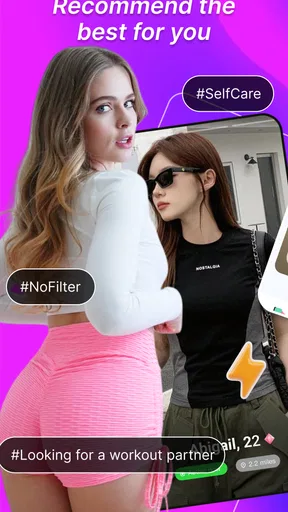




 Analysis by AppCompare
I approached FWB Dating & Local Meet: Lumi as a social app built around a very specific promise: helping people discover nearby connections with a more casual, open-minded feel than a traditional dating service. That focus matters. Instead of treating every interaction as a formal search for a long-term relationship, Lumi is aimed at people who want to browse, talk, and possibly meet others whose expectations are closer to their own.
My overall impression is that Lumi works best when I use it with a clear idea of what I want from a local social experience. It is not an app I would recommend installing casually and then expecting the service to decide what kind of connection suits me. The value comes from being honest with myself, reading profiles carefully, and treating proximity as a starting point rather than a guarantee of compatibility.
It is a free social app from Raja Emran, with optional in-app purchases ranging from $4.99 to $79.99 per item. The app is intended for mature users aged 17 and over, and it requires Android 6.0 or later. Those details place it firmly in the adult-oriented social and dating space, so I would not approach it as a general-purpose friendship app for everyone.
Local discovery is the feature that shapes the whole experience
The central capability is local discovery: Lumi is designed to help me find people nearby who may be interested in similar kinds of interaction. That sounds simple, but it changes how I judge the app. The main question is not whether it offers an enormous collection of social tools; it is whether browsing local profiles makes it easier to move from vague curiosity to a realistic conversation.
In my experience, local emphasis can make an app feel more practical than a broad dating platform. A distant match may look interesting, but distance can quietly make every next step difficult. When the people I see are connected to my area, a conversation has a clearer possibility of becoming an actual coffee, walk, or evening plan. That does not make meeting automatically safe or successful, but it gives the interaction a more concrete context.
The trade-off is that a local-first service depends heavily on the people available around me. In a busy area, browsing can feel more useful because there is a better chance of finding different personalities and intentions. In a smaller community, the experience may become repetitive, and I may need patience before finding someone who is both nearby and genuinely compatible.
I also found that the app’s casual positioning requires more interpretation from the user. Words such as “friends,” “casual,” or “meet” can mean different things to different people. Lumi may bring those people into the same browsing environment, but it cannot remove the need for a direct conversation about boundaries, expectations, and pace.
Worth Reading Before You Choose

EA SPORTS FC Mobile 26 Is a Bigger Football Game, but It Takes Time

Flipboard Shows What News Apps Must Do Beyond the Feed

Switching to Android Auto Means Rethinking Your Driving Routine

Google Calendar Makes a Crowded Week Easier to Manage

Ludo King Makes the Most of the Minutes Between Plans

Baby Panda World Brings Quick Play to Modern Phones, but Its Game Library Feels Busy
What browsing feels like in everyday use
The most useful way to approach Lumi is to treat browsing as a filtering process rather than entertainment. I would not swipe or inspect profiles endlessly without a plan. Instead, I would decide which details matter to me, notice whether a profile communicates clearly, and avoid turning a nearby location into the only reason to start a conversation.
A practical routine is to browse for a short period, save mental notes about the profiles that seem consistent, and then start with a message that refers to something specific. A short, relevant opening is more useful than a generic greeting because it quickly shows whether the other person is actually interested in talking. This is one of the less obvious strengths of a local social app: the surrounding context can give me more natural conversation starters than a completely blank profile.
At the same time, I would keep my expectations measured. A profile can suggest shared interests without proving that the person communicates well. Local discovery reduces one obstacle, but it does not solve mismatched intentions, uneven effort, or awkward conversation. Lumi is best understood as a way to create opportunities, not as a shortcut to a guaranteed connection.
Because the app is free to install, it is easy to test without committing money immediately. That makes it suitable for someone who wants to understand the local atmosphere before deciding whether the service deserves regular use. The presence of optional purchases means I would still pay attention to what I am getting before spending anything. I would not assume that paying automatically improves the quality of conversations or makes a poor local pool more suitable.
A realistic scenario where Lumi makes sense
Imagine I have recently moved to a new neighborhood and do not necessarily want a formal dating process. I might be open to meeting someone for a relaxed activity, a conversation, or a connection that develops without pressure. In that situation, Lumi’s local focus is more useful than a platform built mainly around distant browsing or highly structured relationship goals.
I could use the app during the week to understand who is active nearby, then start one or two conversations instead of trying to contact everyone. If a conversation becomes comfortable, I would suggest a short first meeting in a public place with an easy exit, such as a café or a busy daytime venue. The important benefit is not that Lumi chooses the person for me; it is that the app can help turn “I would like to meet people locally” into a manageable first step.
There is another scenario where the app may appeal to me: I already know that I am looking for a casual arrangement and prefer not to disguise that intention behind formal dating language. Lumi’s mature positioning may make that starting point feel more direct. Still, directness should never be confused with permission to skip consent, respect, or basic safety. Clear communication remains necessary before any meeting.
For someone who wants a serious relationship with detailed compatibility tools, long questionnaires, and a carefully structured matching process, I would look at more traditional dating alternatives first. Lumi’s strongest idea is local, open-ended discovery. That is valuable, but it is not the same as a deep compatibility system.
The small habits that improve the experience
My first tip is to use distance as a practical filter, not as a quality signal. A nearby profile is convenient, but convenience should come after basic trust and communication. I would rather speak with someone slightly farther away who is clear and respectful than rush toward the closest available option.
My second tip is to state intentions early without making the opening message feel like an interview. A simple question about what the person hopes to find can prevent wasted time later. This is especially important in a mature social app, where users may arrive with very different expectations despite browsing the same local pool.
My third tip is to keep the first meeting deliberately modest. I would choose a public location, tell a trusted person where I am going, arrange my own transportation, and avoid treating a promising chat as proof that the person is safe. These steps are not unique to Lumi, but they matter more when the app’s appeal is moving relatively quickly from online discovery to a local meeting.
A fourth useful habit is to judge consistency rather than charm. I would notice whether someone’s messages match their profile, whether they respect a slow pace, and whether they react appropriately to a boundary. Those signals tell me more than an attractive introduction. In a local discovery app, the temptation is to focus on how easy a meeting could be; I think the better approach is to focus on whether the interaction deserves one.
Where the experience becomes less comfortable
The biggest limitation is that location alone cannot create a healthy community. If the nearby audience is small, inactive, or poorly matched to my expectations, Lumi may feel thin even though the concept is appealing. This is a fundamental trade-off of local social apps: a narrower geographic focus can make connections more realistic, but it also reduces the size of the pool I can draw from.
The casual angle can create another kind of friction. Some users may be looking for friendship, some for romance, and others for a more explicitly casual connection. If profiles do not communicate those differences clearly, I may spend time in conversations that were never aligned from the beginning. I would therefore treat the first few messages as an important screening stage, not as a formality.
I also would not choose Lumi if I dislike taking initiative. The app can help me discover people, but the quality of the experience still depends on how I present myself, how thoughtfully I message, and how willing I am to move on from conversations that feel one-sided. Someone looking for a fully guided service may find this more demanding than expected.
The optional purchases deserve a cautious approach as well. Since the app is free, I can explore its basic appeal before paying. If I decide to buy something, I would do so only for a clearly understood benefit and only after confirming that the local community itself is worth engaging with. Spending money cannot replace a good profile, a respectful conversation, or enough suitable people nearby.
Privacy and personal safety should also shape how I use the app. I would avoid sharing my home address, workplace details, financial information, or intimate images with someone I have just met online. I would keep early conversations within the app where practical and arrange meetings in places where other people are present. These precautions are especially sensible for any service centered on meeting local strangers.
Who will get the most from this app?
Lumi is most appealing to adults who want a local social option with a casual, less formal starting point. It may suit someone who has recently moved, someone who prefers nearby connections over long-distance matches, or someone who wants to discuss expectations openly rather than follow a rigid dating script.
It can also work for a user who is comfortable making decisions independently. I need to be able to assess profiles, ask direct but respectful questions, notice warning signs, and accept that not every conversation will lead anywhere. The app gives me a place to begin; it does not remove the judgment required to decide who deserves my time.
I would skip it if I am under the stated age requirement, if I want a strictly platonic community with no adult-dating context, or if I am looking for a highly structured service focused on long-term compatibility. I would also be cautious if I live somewhere with very few active users, because the local premise may not provide enough variety to justify regular use.
The app has reached over a hundred thousand installs and holds a 4.7 average from around thirteen thousand ratings, which suggests that many users have found the concept worthwhile. Its current version is 1.1.5, and it was released on December 25, 2024. I see those figures as signs of meaningful interest, not as a promise that my own local experience will match the overall response.
My recommendation after using the concept as intended
What I like most about Lumi is the way it makes location part of the decision from the beginning. That can be genuinely helpful for people who want a connection that could realistically continue offline. The app’s mature, casual direction also gives it a clearer identity than a general social network where intentions are often harder to read.
What keeps me from recommending it without qualification is the dependence on local activity and user honesty. If the nearby selection is limited, or if profiles are vague, the app cannot manufacture compatibility. I also think users need to be comfortable with direct communication and careful safety habits rather than expecting the platform to handle every difficult part of meeting someone new.
For me, the right way to try it would be to install the free version, build a straightforward profile, browse without rushing, and start only a few conversations that seem genuinely promising. I would wait before making any purchase and judge the app by the quality of local interactions rather than by the number of profiles I can view.
In the end, Lumi is a focused social app rather than an all-purpose answer to dating. Its local discovery approach can be useful when I want nearby, open-ended connections and am willing to take responsibility for choosing carefully. If you value realistic distance, honest expectations, and a self-directed experience, Lumi is worth exploring; if you want intensive matchmaking or a purely platonic network, another category of app will probably suit you better.
Pros
- Focused on finding nearby people open to casual connections.
- Simple profile browsing makes discovering local matches quick.
- Useful for users seeking friendship
- dating
- or flexible arrangements.
- Location-based matching can make arranging in-person meetings easier.
- A niche audience may reduce time spent on incompatible profiles.
Cons
- Local user availability may vary greatly by city or region.
- Some features or messaging options may require in-app purchases.
- Location-based services can raise privacy concerns for cautious users.
- Profiles may differ widely in authenticity and level of detail.
- Casual dating apps require extra care when verifying new contacts.
FAQs for FWB Dating & Local Meet: Lumi
What is FWB Dating & Local Meet: Lumi?
FWB Dating & Local Meet: Lumi is a dating and social discovery app designed for adults interested in casual connections, friendship with benefits, and meeting people nearby. After creating a profile, users can browse potential matches, review shared interests, and communicate through the app. The experience is focused on local discovery, but the quality of matches depends heavily on your location and the number of active users nearby.
Is FWB Dating & Local Meet: Lumi safe to use?
Lumi includes the standard tools expected from a modern dating platform, such as profiles, messaging, and options to report or block other users. However, no dating app can guarantee that every profile is genuine or that every conversation is safe. Avoid sharing sensitive personal information, verify a person’s identity before meeting, use the in-app communication tools initially, and arrange first meetings in a busy public place.
Is FWB Dating & Local Meet: Lumi free to download and use?
The app may be downloaded without an upfront charge, but some features or benefits can be limited depending on the current version and subscription structure. Dating apps commonly reserve enhanced visibility, additional interactions, advanced filters, or other convenience tools for paid plans or in-app purchases. Before subscribing, carefully check the price, billing period, renewal terms, and cancellation options shown in the app store.
How does matching and local dating work in Lumi?
Lumi generally uses information such as your location, preferences, profile details, and activity to show people who may be compatible or nearby. Results can vary considerably between cities, especially in areas with fewer users. A complete, honest profile with clear photos and accurate preferences usually improves the quality of suggestions. Location permissions may be required for the app’s local discovery features to work properly.
What should I know before creating a profile on Lumi?
Before joining, consider what type of connection you want and communicate those expectations clearly in your profile and conversations. Use recent photos, avoid exaggerated claims, and read other users’ profiles carefully rather than relying only on images. Because the app is intended for adult-oriented casual dating, review its age requirements and community guidelines, and make sure your privacy settings are comfortable before becoming visible to nearby users.


